A capsule wardrobe lead magnet helps a specific reader make better clothing decisions with a manageable set of pieces. The value is your method: what to keep, how to combine it, and how to adapt it to everyday life.
For a fashion creator, the starting material may already be in outfit posts and recurring audience questions. This guide shows how to turn that material into a coherent free resource, with an example outline and a downloadable planning worksheet.
01
Choose one reader and one wardrobe problem
A useful capsule guide starts with a clear situation. “Get dressed for a casual office through a mild autumn” creates different requirements from “Pack a week of outfits into a carry-on.” Choose one problem you can explain and demonstrate well.
Write down the reader’s climate, activities, dress expectations, laundry routine, storage, and budget constraints. Be specific about the people and situations your examples serve. Include guidance for adapting fit or fabric instead of assuming everyone can wear the same cut.
“Build a repeatable week of casual office outfits from clothes you already own, then identify the few gaps worth filling.”
Review questions people have actually asked you. If you have no audience feedback yet, ask a few intended readers what makes getting dressed difficult and show them an example page. Record their words without turning a small conversation into a market-demand claim.
02
Build the guide around decisions, not a shopping list
The contents should take the reader from their current wardrobe to a usable set of outfits. Each section needs a decision, an example, or an action that moves that process forward.
| Section | What the reader does | What you supply |
|---|---|---|
| Start here | Decide whether this capsule fits their life. | Climate, activities, scope, and a clear list of exclusions. |
| Wardrobe audit | Choose pieces to keep, alter, or set aside. | A sorting checklist with reasons behind each decision. |
| The capsule | Select a workable set of garments. | Piece roles, colour relationships, fit notes, and substitutions. |
| Outfit combinations | Put the pieces together for real occasions. | Complete examples with explanations of proportion and layering. |
| Fill the gaps | Prioritise any purchases. | Selection criteria, optional shopping links, and alternatives. |
| Make it a routine | Plan a week and review what worked. | A repeatable planning page and a short reflection checklist. |
Sign up below to get the free capsule wardrobe guide planner. Use the plain-text worksheet to draft your reader promise, contents, outfit checks, preview, and launch plan.
03
Prove that your pieces work together
Every proposed outfit should work as a complete look for the situation you promised. A list of compatible colours is only the beginning; fabric weight, proportion, comfort, and the activity still matter.
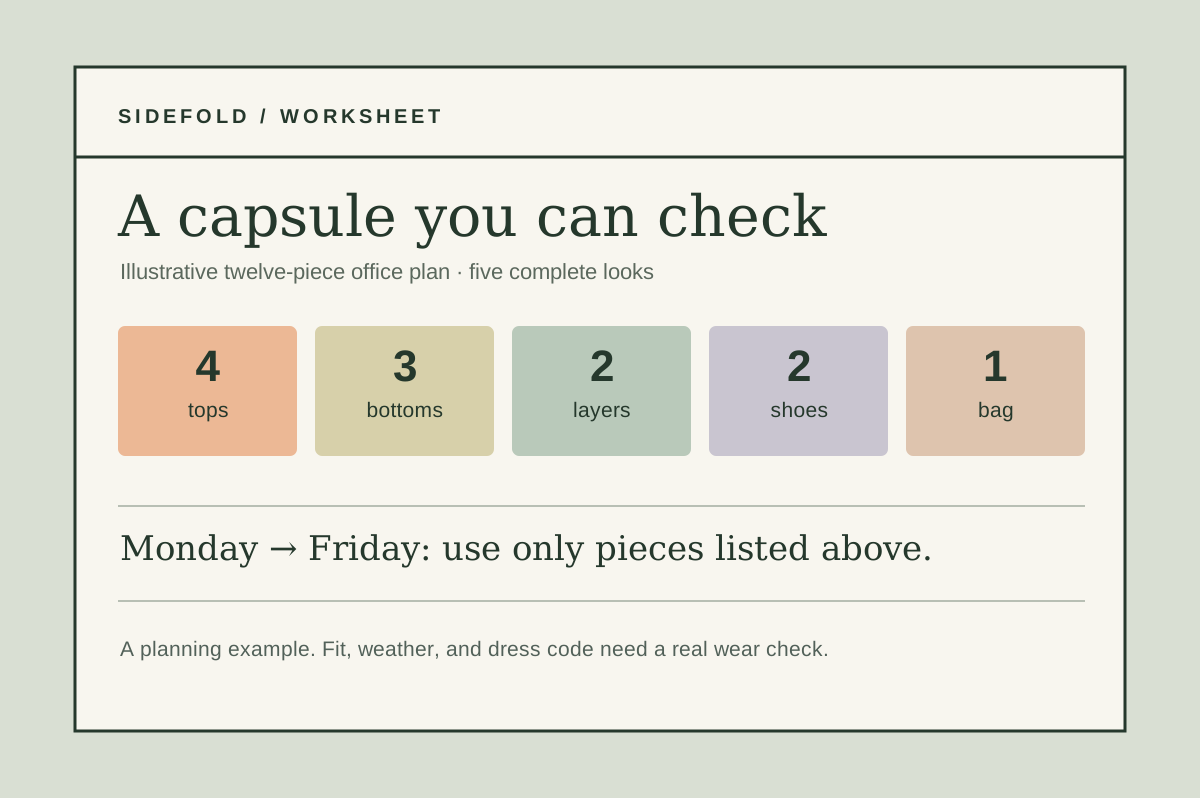
For an illustrative twelve-piece office capsule, try four tops, three bottoms, two layers, two pairs of shoes, and one bag. State that underwear, sleepwear, and specialised weather gear are outside this example. Change the inventory if your reader needs different coverage.
Here is the complete planning set behind that example. The labels make it possible to check that each suggested outfit uses only listed pieces. This is a desk exercise, not a photographed wear test or a claim that the set fits every office or climate.
| Set | Pieces or combination | Why it is included |
|---|---|---|
| Four tops | White shirt, navy tee, fine knit, striped shirt | Two lighter and two warmer starting points. |
| Three bottoms | Dark trousers, straight jeans, midi skirt | Different levels of formality. |
| Two layers | Blazer, cardigan | Structured or softer finish. |
| Two shoes and one bag | Loafers, trainers, work bag | Choose footwear for the day; keep one practical bag. |
| Monday | White shirt + dark trousers + blazer + loafers + work bag | More formal meetings. |
| Tuesday | Navy tee + straight jeans + cardigan + trainers + work bag | Casual office day. |
| Wednesday | Fine knit + midi skirt + blazer + loafers + work bag | Layered office outfit. |
| Thursday | Striped shirt + dark trousers + cardigan + loafers + work bag | Repeat the trousers with a different top and layer. |
| Friday | White shirt + straight jeans + blazer + trainers + work bag | Rewear two core pieces in a casual combination. |
Before using these as recommendations, try each combination on a person in the intended setting. Record fit, temperature, movement, and dress-code exceptions. Replace any pairing that does not work in practice.
Photograph or assemble each combination you intend to include. Give the pieces simple labels so readers can follow the outfit table. Show how a different hem length, trouser shape, or footwear requirement changes the combination.
Avoid multiplying garment counts to advertise dozens of outfits you have not checked. Include combinations you can stand behind. A smaller, well-explained set gives the reader something concrete to use.
04
Choose a format you can keep useful
A finished PDF suits a carefully composed visual workbook. A connected Google Doc suits a guide you expect to revise and publish in multiple reading formats. Choose based on the work you already have and how often it needs to change.
In Sidefold, you can upload a finished PDF or bring in a supported file from Google Drive. A connected Google Doc can power an online reader, PDF, and EPUB. These are different source workflows: uploading a designed PDF does not reconstruct its layout as an editable document.
Read the output on a phone as well as a laptop. Label garments with text, keep outfit references consistent, and avoid tables so wide that the reader cannot connect the notes to the photograph. Check exported editions separately when you offer more than one.
Keep the core advice independent of retailer inventory. Explain what makes a suitable alternative, then treat shopping links as an optional current layer. The shop-the-look guide covers product labelling and link maintenance in more detail.
05
Show readers what they will receive
A convincing preview demonstrates one complete piece of the method. Show an outfit, its explanation, and the action the reader can take. A cover alone does little to establish how useful the guide will be.
Make the signup page explicit about the intended reader, contents, file formats, examples, worksheets, and update policy. State whether readers receive a fixed edition or future revisions. Offer only the support you can reliably provide.
Start with a useful free edition and learn from reader feedback. A focused lead magnet can help you understand which sections people use and what they still need. Check current Sidefold plans.
You can also publish a short wardrobe-audit checklist as a free download. Its job is to help the reader complete a small task and understand your approach. A longer guide can add worked combinations, adaptation guidance, and a complete planning routine.
06
Publish your wardrobe guide with Sidefold
Prepare the source, publication page, and delivery as one resource. In Sidefold, choose a digital guide or download, bring in the file or supported document source, and complete the publication settings before sharing it.
- Add the source.Upload your finished file, import a supported Drive asset, or connect the Google Doc you intend to maintain.
- Prepare the publication page.Write a reader-focused title and description. Review the preview and make clear which formats readers receive.
- Choose access.Publish openly or collect an email address before Sidefold sends the reader a private access link.
- Review before sharing.Open the public presentation on mobile, confirm the intended access and delivery, and correct any confusing labels.
An email collected to deliver a free guide is a delivery contact; decide separately how you will invite readers to your newsletter. Do not promise that a download automatically starts an email sequence unless you have actually set one up.
07
Let useful outfit posts introduce the guide
Use your public posts to demonstrate individual decisions from the guide. One post might show how you choose a layering piece; another can explain why a particular shoe changes the outfit. Each should be useful on its own.
Connect the post to the guide when the reader needs the broader method. “The guide walks through the full workweek capsule” is a clearer invitation than a generic announcement that a new resource exists. Keep an easy route to the guide from your creator page; our link-in-bio vs. shoppable posts comparison explains that structure.
Track visits, access requests, reader questions, and support requests. A frequently asked question may reveal an unclear promise or a missing example. Improve that part of the guide before adding more pages. Affiliate earnings from optional shopping links remain with your affiliate provider; see ShopMy vs. LTK if you are comparing providers.
08
Questions about publishing a wardrobe guide
What should a capsule wardrobe lead magnet include?
Include a defined reader and use case, wardrobe-selection rules, complete outfit examples, fit and substitution notes, and an action plan. A shopping list can support the guide, but the lasting advice should remain useful when individual products sell out.
How many pieces should my capsule wardrobe contain?
Choose the number from the reader’s actual needs, including weather, activities, laundry, and storage. State what counts as a piece. The twelve-piece example in this article is a planning exercise, not a universal capsule wardrobe rule.
Can I publish a PDF I have already made?
Yes. Sidefold supports uploading a finished PDF as a digital guide or download. Prepare the title, description, preview, and access expectations. Uploading a PDF does not automatically turn it into an editable Google Doc or EPUB.
Can I offer a free wardrobe checklist?
Yes. A Sidefold guide or download can collect an email address and provide private delivery access. Keep the checklist useful on its own and explain clearly what it contains.
Can a wardrobe guide include affiliate links?
Yes, when the links and distribution format are permitted by your affiliate provider. Identify affiliate recommendations clearly and distinguish current shopping suggestions from the lasting styling advice. Your provider handles the commission generated by your own affiliate links.
Give your styling ideas room to become a guide.
Bring a finished file or living document into Sidefold and publish your next lead magnet.